Machine Learning vs AI. What’s The Difference?
Buzzwords abound when it comes to the world of technology. AI and machine learning are two of these buzzwords. Already 77% of the devices we use feature one form of AI or another, so if you don’t already have tools powered by either of them, you will surely in the future. ML algorithms are also used in various industries, from finance to healthcare to agriculture. It is not easy to see the difference between AI and Machine Learning.
Then what is the difference between Artificial Intelligence and Machine Learning? Regrettably, the two terms have been used a lot interchangeably, and so many people cannot differentiate between the two. But even though both are closely related, AI and ML technologies are quite different.
Let’s look at the main differences between Artificial Intelligence and Machine Learning, where both technologies are currently used, and what the difference is.
What is AI?
Artificial Intelligence is a subdivision of computer science, the aim of which is to enable a computer or machine to simulate human behaviour and do human-like actions. Scientists are trying to create an intelligent machine capable of thinking, reasoning, learning by experience and coming up with its own decisions the same way a human being does.
Artificial Intelligence was first introduced by Alan Turing in 1950 in his classic work, Computing Machinery and Intelligence. Often considered the “father of computer science,” Turing asked in the paper the following question: “Can machines think?” Afterwards, he outlined a way of testing his question, the Turing Test.
The test entails a human subject posing questions to the computer and the other human subject. Provided that, according to the responses, the individual who poses the questions is not able to distinguish between the candidate who is a human being and the one who is a computer, the latter manages to pass the Turing test.
Turing estimated that the Turing machines could pass his test before 2000, but by 2022, no AI has passed his test. Although the list of tasks that Artificial Intelligence can perform well is ever-expanding, these machines are as yet not capable of interacting with people on an emotional level that might enable them to deceive the human participants in a genuinely emotional way.
How can AI be used?
AI has been around for over 50 years in one way or another. Nonetheless, AI has experienced tremendous discoveries over the past years due to the enhanced computing power, availability of data and emergence of novel algorithms.
Artificial Intelligence is now literally ubiquitous – we can apply it to robots and even to large datasets, but we also use it in our ubiquitous digital assistants, such as Alexa or voice search in our smartphone apps. It has also been proven effective in almost all areas where it was applied, such as in healthcare, banking, education and manufacturing. That, then, should not come as a surprise to anyone that by 2025 the world will be globalised.
In What Places can you find Applications of AI?
And these are just two examples of how Artificial Intelligence already strives to demonstrate how useful it can be:
Artificial Intelligence is regularly used in the medical field to diagnose cancer, detect abnormalities in medical imaging, spot and mark life-threatening cases, manage chronic diseases, and even predict stroke outcomes.
AI assists banks and other financial institutions in collecting and processing big data to receive useful insights about their customers and be able to customise their service to the customers. In addition, the use of digital payments, AI bots, and biometric fraud detection systems also allows them to enhance their customer service and the overall security of the system.
Artificial Intelligence (AI) is a commonly used tool in law enforcement to keep track of gatherings and is also being applied to facial recognition and anomaly detection in video footage. In predictive policing, AI is used to identify and analyse large volumes of historical crime data to identify places or people at risk. Nonetheless, this application of AI is still regarded as controversial.
A lot of stores and services (Amazon and Netflix) have AI that helps them propose the most applicable products to their clients. AI-based engines access the past customer behaviours on the site (searches, clicks, purchases, etc.) and use the information to decide what that particular consumer may be interested in the most in the future. AI-based product suggestions are useful in assisting the customer to arrive at what they are seeking within a short period. It also assists brands in positioning their most popular items before the new potential customers.
The use of chatbots and virtual assistants that can speak natural language is continually gaining popularity due to their everyday applicability. The percentage of those individuals who have a voice search device shows that it is a regular habit to use it in their everyday life (72%). You do not have to type a question into the search box, but you can talk to the assistant as you would to a real person and have the bot answer you or do simple things such as ordering groceries.
The Potential of AI
These are only the tip of the iceberg; AI has much more potential. The list of applications of AI-powered devices continues to expand – automatic traffic lights, business predictions, 24/7 monitoring of factory equipment, etc.
And although it is a good thing in the eyes of some of us because artificial intelligence machines may assist us to be smarter and more efficient at work, there are as many people fearing that one day we may see machines replace all human jobs, making us unemployed.
Also, several ethical questions need to be answered before we begin to rely on artificial Intelligence devices are many. The biggest issue is that AI systems provide biased outcomes. This can frequently propagate the biases and stereotypes of the real world as it at least favours results that have the highest click-through rate. This problem is being addressed by computer scientists, but AI may require a considerable time to be neutralized.
What is Machine Learning?
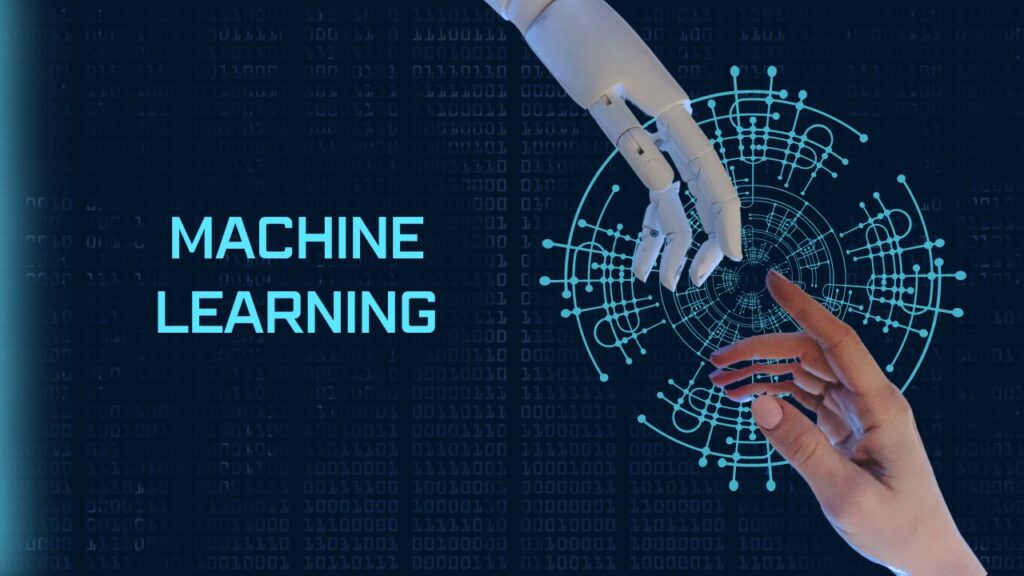
Machine Learning is a subfield of Artificial Intelligence and computer science that involves data and algorithms to recreate human learning and become increasingly more accurate through time.
In this case, researchers want to create computer applications that will be able to retrieve and utilise information to educate themselves. Learning starts with observation or data, such as examples, first-hand experience or teaching to discover patterns in data. These patterns are then utilised by the learning algorithms to make improved decisions in future. The idea here, simply, is to enable the computers to comprehend the scenario without human intervention and then modify their behaviour to the appropriate response.
Supervised Machine Learning
The algorithm receives a set of data with the expected results, and it has to determine how it can attain them. Then, using the data, the algorithm identifies data patterns and makes predictions confirmed or corrected by the scientists. This is repeated till the algorithm has a high degree of accuracy/performance on a task.
Unsupervised Machine Learning
Machine learning algorithms also study data to identify patterns in this type, but it doesn’t get specific instructions or expected results. Instead, the machine will be required to process the data, determine the relationships and correlations and subsequently put the data in place.
Semi-Supervised Machine Learning
It is analogous to supervised learning except that scientists are given labelled (described in detail) and unlabeled (not described) data to enhance the accuracy of the algorithm.
Reinforcement
A reinforcement learning set of actions, parameters, and end values is provided to the algorithm. The system then analyses and comprehends the rules, and then evaluates different options and possibilities in order to identify the best solution to a certain task. With the help of this approach, the machine will be able to learn through its experience and adjust to a situation in order to deliver the most successful outcomes.
Computer scientists also enjoy the teaching technique known as the deep learning technique, and it is frequently applied in speech recognition, natural language processing, machine translation or medical image analysis.
Since deep learning methods are typically based on neural network architectures, they are sometimes called deep neural networks. Deep in this context implies the number of layers within the neural network because a conventional neural network would only have 2-3 hidden layers, yet that of a deep network would have up to 150.
This form of machine learning entails training the computer to learn in a similar manner as humans, i.e. having the knowledge of simple concepts and then acquiring knowledge of abstract and more intricate concepts.
A key benefit of deep learning includes its capacity to handle unstructured data, e.g. text, images and voice and then make it structured.
What are Some Possible Uses of Machine Learning?
Machine Learning has numerous applications in different areas, and it is constantly increasing. As a case in point, we are already applying ML algorithms in search engines on the internet, email filters to block spam, banking software to identify suspicious transactions, and numerous applications on our mobile phones that identify voices. Below are only two examples of how those algorithms will already be successfully used:
Scientists at the Commonwealth Scientific and Industrial Research Organisation in Australia developed a machine-learning approach that can be used to pinpoint individuals who match certain trials by using patient medical records.
Since ML systems are capable of scanning large data volumes to identify unusual activity or anomalies and alert in real-time, they are best suited to detect fraud during financial transactions.
In agriculture, computer vision and ML algorithms can be utilised to differentiate and identify the weeds at low costs without environmental damage and with limited side effects. They can even be applied in powering robots to destroy weeds, thereby saving the use of herbicides.
Generally, machine learning algorithms can be applied everywhere when extensive data is required to discover trends and patterns. The biggest problem with such algorithms, however, is that it is highly susceptible to errors. Inputting the wrong or incomplete data may result in catastrophe in the algorithm interface, since all the further predictions and actions performed by the algorithm may be biased.
As an illustration, when one of your factory equipment monitoring sensors is faulty, the incorrect data that it transmits can lead the machine learning program to act in an unforeseen manner, simply because it used the incorrect data to update an algorithm. This is why the data that is introduced into the program should be checked on a regular basis, and the ML actions should be checked once in a while, as well.
AI vs Machine Learning. What is the end Difference?
Even though Machine Learning is a component of Artificial Intelligence, those are two different things. The goal of Artificial Intelligence is to develop a computer that is capable of thinking like a human and of solving intricate problems. Meanwhile, ML assists the computer to do so by allowing it to make predictions or make decisions based on historical information without any human directives.
ML algorithms can do more than AI can as well. Scientists are establishing intelligent systems that are capable of doing any complex task, but the ML machines are only capable of doing all the tasks that they are trained to do, with remarkable precision.
AI and machine learning are closely related to each other – the rapid development of AI technology is in part due to the breakthroughs in ML.
We will eventually be able to make artificially intelligent human-like machines through both of them. The new technological developments have had the definite effect of taking us as near to that objective as we have ever been before. This article was a simple introduction to AI vs Machine Learning and their distinctions. Now time to apply them in your other projects.