What Are The Practical Applications of Machine Learning in Various Industries?
Machine learning (ML) is one of the most promising technologies of the digital era. Machine learning is a type of artificial intelligence (AI) that allows computers to learn from large data sets, recognize patterns and make predictions without being explicitly programmed for each specific task. With its ability to enhance efficiency and cut costs, machine learning is becoming a powerful tool for businesses, governments, healthcare providers, and educational institutions.
Machine learning is transforming the world as it is applied to various fields, such as recommending products on e-commerce platforms or identifying fraudulent activities in financial transactions. It can handle massive amounts of data and provide valuable insights that can be used for action, making it a valuable tool in almost any industry.
This article will delve into its practical applications in various industries, the advantages it offers, and its ongoing impact on innovation on a global scale.
What is Machine Learning?
Machine learning is a branch of AI that has the ability to learn from data and get better the more data it encounters without having to be explicitly programmed for every situation.
Machine learning algorithms learn from data rather than a set of rules, predict patterns and adjust their predictions based on new information. This makes ML particularly useful for solving complex problems that are not easily solved using traditional programming.
Why is Machine Learning So Important?
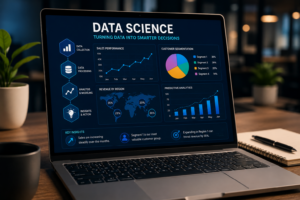
With the amount of data that the organizations gather daily, it’s a must-have feature of the machine learning. ML can be used to convert this raw data into meaningful insights that can inform faster and more accurate decision-making.
These are some of the benefits:
- Automating repetitive tasks
- Improving operational efficiency
- Reducing human error
- Enhancing customer experiences
- Increasing productivity
- Supporting predictive analytics
- Recognising trends or underlying patterns
- Improving business profitability
What are the Applications of Machine Learning in Healthcare?
Machine learning has the greatest impact on the healthcare sector.
Disease Detection
Medical imaging technologies like X-rays, CT scans, and MRIs are used to capture images of the body and the use of machine learning models allows for the early detection of diseases such as cancer, pneumonia, and heart conditions.
Personalized Treatment
The application of ML algorithms in the medical field enables physicians to make informed recommendations for treatment, considering a patient’s medical history, genetic makeup, and lifestyle.
Drug Discovery
Machine learning is employed in pharmaceutical companies to analyze chemical compounds and speed up the process of creating new drugs at a lower cost.
Predictive Healthcare
Predictive Analytics is utilized by hospitals to recognize high-risk patients, project outbreaks and boost patient care.
What Role does Machine Learning play in the Finance Sector?
Machine learning plays a pivotal role in boosting security and customer service for banks and financial institutions.
Fraud Detection
Machine learning systems track transactions in real time and narrow down on suspicious transactions rapidly.
Credit Scoring
Financial institutions evaluate customers’ creditworthiness by considering their financial behavior, payment and income history with a predictive model.
Risk Management
Machine learning is more accurate than traditional approaches for determining investment risks, loan defaults, and market changes.
Algorithmic Trading
Investment companies rely on the use of machine learning algorithms to analyze market trends and to make investment decisions within milliseconds.
So, What are the Uses of Machine Learning in Retail and E-Commerce?
Machine learning helps businesses in the retail industry increase sales and enhance customer satisfaction.
Personalized Product Recommendations
Internet stores offer product recommendation based on the customer’s browsing history, buying habits, as well as preferences.
Demand Forecasting
Retailers forecast future demand so they are better able to manage their stock and minimize stock-outs.
Dynamic Pricing
Machine learning uses information such as customer behaviour, market conditions and competitor pricing to adjust prices of products according to demand.
Customer Service Chatbots
AI chatbots respond to customer inquiries in real-time and give personalized support 24/7.
What is Machine Learning Used for in Manufacturing?
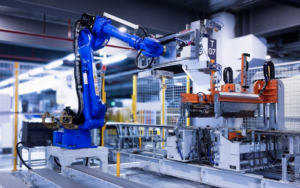
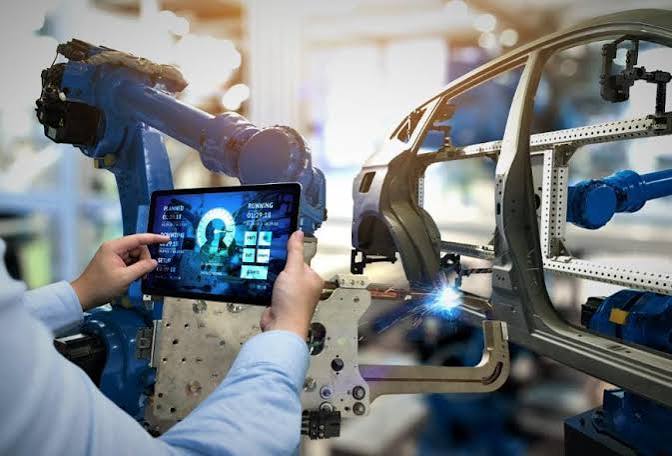
Machine learning is applied to manufacturers to boost productivity and cut down on operational costs.
Predictive Maintenance
Use machine learning to analyze equipment data and predict failures before they occur, reducing downtime.
Quality Control
These types of computer vision systems can accurately detect product defects in the production process.
Supply Chain Optimization
Misuses of ML can lead to suboptimal inventory, logistics, warehouse, and delivery schedules.
Process Automation
Automating repetitive tasks in manufacturing enhances efficiency and minimizes waste.
What Are the Advantages of Machine Learning in Transportation?
Transportation companies are turning to machine learning to make improvements in safety and efficiency.
Route Optimization
The navigation system shows the fastest way to go according to the traffic pattern and road conditions.
Autonomous Vehicles
Self-driving vehicles use machine learning to identify road signs, objects and make driving decisions.
Fleet Management
Predictive analytics is used by logistics companies to track vehicle performance, fuel usage, and maintenance schedules.
Traffic Prediction
Smart city systems used to analyze the traffic data and move the traffic in a way to minimize congestion in the city.
So What is The Part of Machine Learning in Education?
Machine learning is revolutionizing education by providing tailored learning experiences.
Adaptive Learning Platforms
Online Learning Systems automatically change the course content based on the student’s progress and pace of learning.
Student Performance Prediction
Schools are able to detect that students may require extra assistance prior to the problems becoming serious.
Automated Grading
Automatic evaluation of assignments, quizzes and objective assessment, using machine learning, saves educators time.
Intelligent Virtual Tutors
AI tutors offer one-to-one support and respond to student queries anytime.
What is the Impact of Machine Learning on Agriculture?
Machine learning technologies are helping agriculture to be smarter.
Applications include:
- Predicting crop yields
- Detecting plant diseases
- Monitoring soil health
- Optimizing irrigation
- Managing fertilizer usage
- Forecasting weather conditions
- Improving livestock management
These innovations allow farmers to boost productivity and lower their costs and resource usage.
What are Some of The Problems That Come With Machine Learning?
While machine learning has numerous advantages, there are a number of challenges for businesses.
Data Quality
Data of poor quality or incompleteness can affect the accuracy of the model.
High Development Costs
It can take a specialized skill set, computing power and constant maintenance to build machine learning systems.
Privacy Concerns
Companies are required to safeguard vital customer data and adhere to data protection laws.
Bias in Algorithms
An unfair or inaccurate prediction can result from biased training data.
Integration Challenges
The challenge is for many companies to integrate machine learning solutions into their current software systems.
How will Machine Learning Evolve in Various Industries?
In the future, as computing power, cloud technology, and data grows, machine learning will continue to grow.
Future trends include:
- More intelligent automation
- Use advanced generative AI applications and tools
- Smarter healthcare diagnostics
- AI-powered cybersecurity
- Improved robotics
- Personalized customer experiences
- Sustainable manufacturing
- Smart cities and connected infrastructure.
The increasing use of data-driven decision-making will ensure that machine learning continues to be a major contributor to innovation and competitive advantage for businesses.
Conclusion
Industries are being revolutionized by machine learning, which allows businesses to automate tasks, process huge volumes of data and make wise choices. Its uses are expanding across industries, such as healthcare, finance, retail, manufacturing, education, transportation, and agriculture.
By employing machine learning, companies can achieve greater efficiency, better customer experiences, lower operating expenses, and valuable insights from their data. Despite its potential issues with privacy, implementation costs and algorithmic bias, ongoing improvements in AI and computing power have made machine learning more accessible than ever.
Companies that adopt machine learning now will be more likely to succeed in the future as it becomes more and more data and digital.
Frequently Asked Questions (FAQs):
1. What is machine learning in simple terms?
Machine learning is a subset of artificial intelligence that allows computers to learn from data, identify patterns, and make decisions and predictions without prior programming for each specific task.
2. In what ways is machine learning applied the most?
Machine Learning is a key component in many industries, such as healthcare, finance, retail, manufacturing, transportation, agriculture, education, telecommunications, and cybersecurity.
3. What are the benefits of machine learning in business?
It frees up repetitive tasks, aids decision-making, forecasts trends, identifies fraud, streamlines supply chains, and boosts customer satisfaction.
4. What is the difference between machine learning and artificial intelligence?
No, machine learning is a part of artificial intelligence, and artificial intelligence is a broader concept of making intelligent systems.
5. What is the required skill set to work on Machine Learning?
Core skills range from programming (Python or R) and mathematics & statistics to data analysis, machine learning algorithms, and familiarity with AI frameworks like TensorFlow or PyTorch.
6. What are the greatest problems in machine learning?
Issues that are commonly met include data quality, implementation cost, data privacy, algorithm bias, and implementation integration with existing systems.
7. Is there a problem with machine learning for small businesses?
Yes. Machine learning can be employed in small businesses for customer segmentation, sales forecasting, marketing automation, inventory management, and customer support.
8. How can people take part in ML?
AI-powered automation, smarter healthcare, autonomous systems, predictive analytics, personalized services and more innovation in almost any industry is the future.